The Lighthouse of Alexandria
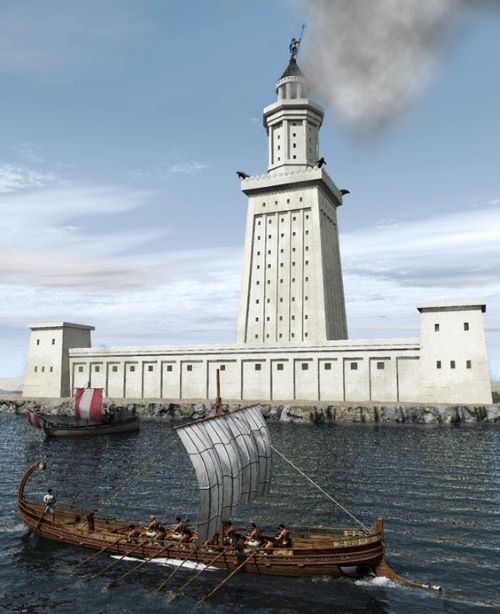
The Lighthouse was badly damaged in the earthquake of 956, and then again in 1303 and 1323. The two earthquakes in 1303 and 1323 damaged the lighthouse to the extent that the Moroccan traveler Ibn Battuta reported no longer being able to enter the ruin, when he visited it in 1349 AD. Finally the stubby remnant disappeared in 1480, when the then-Sultan of Egypt, Qaitbay, built a medieval fort on the larger platform of the lighthouse site using some of the fallen stone.
The Death of the Ancient World
The Beginning of the End
for Roman Africa, Part III
If we had to pick a date for the fall of the ancient world I think September, 642 AD is as good as any. In that month the traitorous elements in the Roman Government surrendered the great fortress city of Alexandria to the Muslim invaders ending over 600 years of Roman rule and ending a local culture that dated back to 3150BC.
Alexandria was crucial to maintaining Imperial Roman control over the region, based on its large Greco-Egyptian population and economic importance. The population of Alexandria was heavily influenced by both the cultural and religious views of their Roman rulers; nevertheless, the rural population spoke Coptic, rather than Greek, which was more common in the coastal cities.
The Romans relied on Egypt as the main center of food production for wheat and other foodstuffs. Alexandria also functioned as one of Rome's primary army and naval bases, as there was normally a significant imperial garrison stationed in the city.
A Reign of Terror
When the Arabs invaded they faced a divided Roman Empire. The Emperor Heraclius had appointed Cyrus as both the Chalcedonian Patriarch of Alexandria (who was unrecognized by the Egyptians) and the praefectus Aegypti. Cyrus began a ten-year-long reign of terror in an attempt to bring the Egyptians to Chalcedonianism, forcing them to pray in secret and torturing many to death.
The Coptic Pope, Pope Benjamin I, was in hiding throughout this, and ruthlessly but unsuccessfully pursued by Cyrus.
Map of the Middle East on the eve of the Muslim invasions.
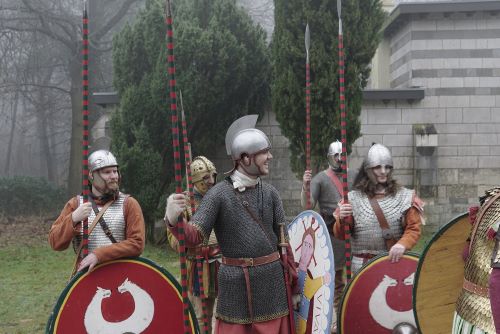
Roman-Byzantine reenactor infantryman from the age Justinian. The Roman infantry facing the Arabs 100 years later might have looked much like this soldier.
The March to Alexandria
The striking thing about the entire Arab invasion of Egypt was that Roman forces were scattered all over the country and were defeated one by one. It is what I have said for years, most "generals" are worthless bureaucrats who are vaguely aware they should point their army in the general direction of the enemy first before attacking.
The Romans had already seen the lightning fast Arab attacks in Syria and Palestine. Though it goes against the grain to give up land to an enemy, like the Russians in 1812, the smart move would have been to fall back and not engage. Rather to gather all Roman troops behind the walls of Alexandria.
The Arabs had no siege equipment to attack a huge walled city. Once inside the city the Romans would be standing shoulder to shoulder with their entire army. They would be invulnerable to any meaningful attack and could be endlessly re-supplied by the entire Roman Navy.
The Arabs would have been blocked from advancing. If they tried to march up the Libyan coast they would have been caught in a vice between the Roman Army in Carthage and Libya and the garrison in Alexandria.
Once the Arabs had run out of steam, and the Roman army had been reinforced, the Romans could have advanced out of Alexandria and started to retake Egyptian provinces.
Sadly, this was not to be, and Rome lost Egypt and all of North Africa as a result.
Click to enlarge
The Alexandria Campaign
Map from The Great Arab Conquests by General Sir John Bagot Glubb
The Muslim commander Amr ibn al Aasi started moving north from the captured fortress of Babylon.
A skirmish with the Romans took place 40 miles to the north of Babylon at Tarrana. The Romans were driven back after a sharp engagement.
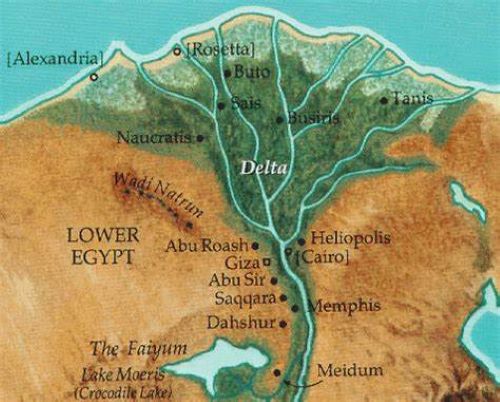
Ten miles further on the Arabs found themselves opposite the fortress and city of Nikiou which lay on the east bank of the Nile. The Arabs were obliged to cross the river in order to attack it. An active and enterprising commander might have sallied from the town and disrupted the river crossing or attacked the Arabs when they were halfway across defeating them.
Instead, panic seized the garrison which evacuated the city in confusion and scrambled into boats and escape down river. The Arabs rushed to attack killing many Roman soldiers on the shore and in the water.
The city which was surrounded with fortifications was left undefended. The Arabs entered the city putting many of the inhabitants to the sword. This massacre took place on May 13, 641. They then raided surrounding villages, killing and plundering indiscriminately. It is probable that is action was taken as a deliberate act of policy to terrorize the local population that vastly outnumbered the invaders. If the locals rose up the Arab's communication lines with Babylon would be cut.
The Arabs were able to capture numerous places like Nikiou. These places were also deliberately plundered and the people massacred.
It should be noted that in attacking Babylon the Arabs attacked Romans . . . that is to say the Orthodox Church Party. But the attacks around Nikiou were directed against the Copts, the native born Egyptians who were the victims of Roman persecutions.
After a few days in Nikiou, Amr ibn al Aasi resumed his march on Alexandria. A few miles to the north his advanced guard encountered a considerable Roman army and was severely handled. The Arabs were forced to flee and take refuge on some high ground where they were virtually surrounded. Amr hastened up with the main body and drove the Romans back.
The Roman force was the remaining field army, commanded by Theodore, from the defeat at Heliopolis the year before.
Reinforcements had arrived from Constantinople. A few miles north of Damanhour another battle took place with The Romans eventually withdrawing.
At Kariun, Theodore took up a defensive position and very heavy fighting followed. One historian noted that the Copts and the Greeks had joined forces against the Muslims. The Arab massacres convinced the Copts that they had nothing to gain from changing Masters.
The Battle of Kariun lasted for ten days.
This was a slugfest battle of attrition, not one of swift movement or flanking attacks. Even so, in July 641 Théodore marched his Roman troops in good order back behind the walls of Alexandria.
The Romans did not flee the Arabs. It is worthy to note that the Arabs had NO DESIRE to attack the Romans as they redeployed into the city. To not attack a retreating foe means the Arabs feared additional battle.
Colorized photo of a Bedouin warrior holding
The Siege of Alexandria
Alexandria was one of the greatest cities in the world. Founded by Alexander the Great 1,000 years before, it contained well over one million people. Egypt was an immensely wealth country, and Alexandria had long been its capital. The lighthouse above the harbor was one of the seven wonders of the world. Once the granary of Imperial Rome, the Nile Delta now played the same part in the economy of Constantinople.
The whole of this massive city was surrounded by massive walls and towers, against which such missiles as the Arabs possessed were utterly ineffectual. One side of the city was defended by the sea and the Roman Navy. Also, the Arabs could not boast of a single ship. The Romans had total control. The landward side was protected by Lake Mareotis and by a number of canals. The result was the only unimpeded approach for an attack was on a comparatively narrow front from the east.
Following the withdrawal of the Romans into the city, Amr launched a hasty and ill-advised assault on the city walls, and was met with a bloody repulse. The Arabs were forced to withdraw to a distance out of range of the ballistae mounted on the ramparts where they pitched camp.
Amr appears to have appreciated his utter inability to take so great a fortress by storm. With the Romans in total control of the sea, Alexandria could have held out for years.
In 626 Constantinople itself has just withstood a siege from the Persian Army and Avars, aided by large numbers of allied Slavs. Heavy siege equipment was used against Constantinople. Something the Arabs lacked. The result was a Roman victory.
In a few weeks the Nile River would start to rise. Amr had no interest in campaigning in a Delta filled with water. He left a largeish detachment southeast of the city to keep the Romans inside the city walls and prevent them from re-establishing their authority in the Delta.
He then marched across the Delta eastward to Sakha and the down to Tuka and Damsis back to Babylon. All three towns were walled and had Roman garrisons which closed their gates as the Arabs approached. Unable to deal with masonry walls, the Muslims passed them by. The open countryside and villages were plundered and their crops burned. After this rather unsuccessful attempt to terrorize the Delta, Arm returned to Babylon.
Whenever possible the Arab campaigns avoided mountains and wetlands in favor of fighting in the open desert. The very wet Egyptian Delta with its many streams and canals made it difficult for the Arabs to move rapidly like they did in Syria.
The Campaign That Never Happened
The unsuccessful terror attacks in the Delta illustrate that the Arabs were only really successful in the open countryside.
British General John Bagot Glubb speculated on what the Romans might have done in Egypt. At this stage the Arabs could not fight in the Delta nor the Romans fight in the desert. He suggested that the Romans should have remained on the defensive and only defend the Delta within the irrigated and cultivated areas. The Romans should have worked immediately to fortify towns and villages beginning with those settlements at the edge of the desert border.
The locals in these towns should have been trained and armed to defend themselves assisted by small groups of regular soldiers here and there. Further back in central positions mobile columns of Roman soldiers should have been positioned to rapidly respond and repulse any Arab raids. The inhabitants in the front line could have been told to just hang on for 12 hours and reinforcements would arrive.
The Arabs liked to travel and fight in the desert, but there is no food there. Arab forces depended on the cultivated areas for supplies. An energetic defense of the cultivated areas would have put great pressure on the Arabs for the very basics. Glubb felt this type of aggressive defense would buy time for the Romans to build up their field armies.
The problem with Glubb's idea is it required a loyal local population. Though the Egyptian Copts were starting to turn against the Muslims, there was no love for the Greek speaking population in the cities nor any love for their Greek speaking armies.
So we are back to my original idea above that all Roman troops should have redeployed into Alexandria where they could hold out for years.
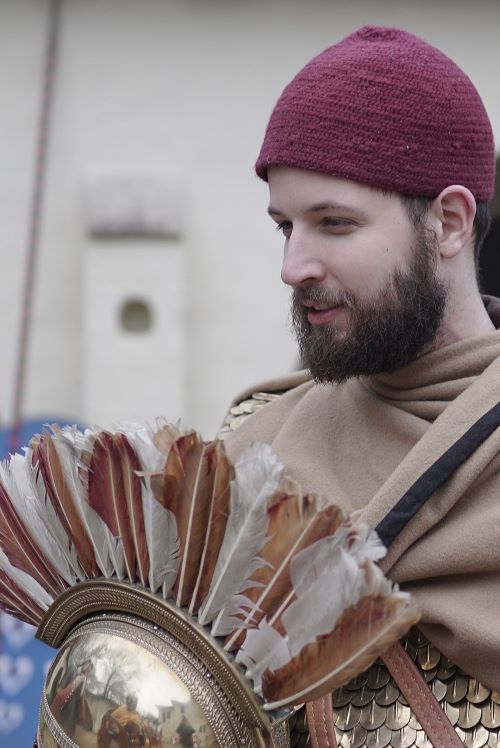
Late Roman Empire CavalryThe basic look of the Roman cavalry during the Arab invasions would have not changed all that much. The heavy Cataphract units would have more armor and other units would have less for better mobility. The armored cavalry would act as the mailed fist of any Roman field army.
Solidus of Heraclius Constantine (right) with his father Heraclius (left)
Anarchy in Constantinople
The great general and Emperor Heraclius died in February, 641 in the middle of the Battle for Egypt.
Before his death Heraclius was preparing reinforcements. He declared his intention to lead this force in person to reconquer Egypt. But the sick 66 year old Emperor was not the man he was when he crushed the Persian Empire years before in the 620s. How the Egyptian campaign would have turned out is interesting to speculate on.
With the death of Heraclius there was soon anarchy in the royal family. Often called Constantine III, he was crowned co-emperor by his father on 22 January 613. Constantine became senior emperor when his father died on 11 February 641. But the new 29 year old Emperor died of tuberculosis, ruling for only three months.
Just to put a nail in the coffin of Roman Africa, before he died Constantine III recalled from exile Cyrus to advise him on Egypt. As the Patriarch of Alexandria, Cyrus had tortured and murdered Coptic Christians for ten years.
No sooner was Constantine dead than Martina, the hated widow of Heraclius' incestuous marriage, caused her fifteen-year-old son Heracleonas to be proclaimed sole Emperor. But Constantine had left two young sons. The eldest Constans was twelve years old.
The Senate in Constantinople sided against Martina and the population rose in revolt.
Valentine, the commander of the army in Asia Minor, marched on Constantinople and forcibly crowned Constans as co-emperor.
The Empire was briefly "ruled" by a set of 15 and 12 year old Emperors.
The rule of Martina and her sons was brief. The historian Theophanes states they were ousted by the Senate, and there is some evidence to suggest that the Senate acted following riots instigated by the aristocratic Blue faction. A seventh-century inscription found in the walls of Byzantium references the role that the Blues had within this insurrection, saying "The fortune of Constantine our God-protected ruler and of the Blues is victorious."
The sources all report that some manner of the Byzantine practice of mutilating defeated enemies to prevent them from reclaiming the throne was undertaken at the defeat of Martina and her sons, possibly the first time such occurred, although they disagree on the exact nature of these mutilations.
Theophanes says that the tongue of Martina and the nose of Heraclonas were cut off. John of Nikiû reports that Theodore "had Martina and her three sons, Heraclius, David, and Martinus, escorted forth with insolence, and he stripped them of the imperial crown, and he had their noses cut off, and he sent them in exile to Rhodes" in 642.
This left a 12 year old on the Roman throne.
Treason at the Highest Levels
Heraclius committed his adult life to saving the Roman Empire, first against the Persians and then against the Muslim Arab invasions.
The child "Emperors" had no clue what to do. The puppet masters of the child Emperors appeared eager to give away Roman North Africa as long as they could protect their money and power in Constantinople. To me this was treason.
Once Constantine died, Martina sent Cyrus back to Egypt. Martina was engrossed in the palace intrigues to place her son on the throne, and we can assume she was anxious to terminate the war with the Arabs and surrender Egypt.
The spineless Cyrus was good for murdering and torturing Egyptian Copts but not much else. He eagerly persuaded both Martina and the young Heracleonas of the necessity of surrender. He pressed for surrender so energetically that it went beyond mere execution of his official instructions.
Meanwhile violence broke out in Alexandria. The reinforcements sent by Constantinople were divided against each other, some supporting the claims of Martina and some the claims of the sons of Constantine.
Soon conflicts broke out in the streets of Alexandria between supporters of the two factions. The Blue and Green circus factions in Constantinople were also represented in Alexandria and backed those fighting in the streets. Looting and arson was rampant in the city.
Click to enlarge
The Roman Empire in 650AD
After the Conquest of Egypt
Having been reappointed Patriarch and Imperial Governor of Egypt, Cyrus landed in Alexandria on September 14, 641. He was greeted with great popular enthusiasm by the mostly Greek Orthodox population of the city. With the Muslims outside the walls and factional fighting in the streets, the people hoped for stability and security.
Little did they know that Cyrus had come back not to defend the people but to abandon them.
In October, 641 Cyrus set out for Babylon to meet Amr ibn al Aasi with the intention of surrendering Alexandria and all of Egypt. He had apparently not told anyone in Alexandria his intentions. The people still believed he was there to save them.
Had Cyrus received authority from the Emperor to surrender? If so from which Emperor did he get his authority: the 15 year old Heracleonas? or the 12 year old Constans? or from the incestuous and intriguing Emperess Martina?
Amr had returned to the fortress of Babylon after a rather unsuccessful campaign through the northern Delta leaving Egypt half conquered. If the aged Heraclius had lived long enough to carry out his plan of personally commanding an army in Egypt then resistance might have been prolonged indefinitely.
As it is, on November 8, 641 Cyrus signed an agreement with Amr to surrender all of Egypt.
The treaty stipulated that the people of Egypt pay a tax of two dinars per man and that Christians and Jews be allowed to freely worship. An armistice was to last for 11 months until September 642. During this period the Arabs would not attack Alexandria, and the Roman army would evacuate the city by sea taking its possession with it. The Romans promised never to return to Egypt.
When the populace of heard of the surrender, the people were seized with furious indignation. Mobs of people ran through the city streets to the palace with the object of lynching the Patriarch.
For a short time Cyrus was in imminent danger. Cyrus persuaded his critics that surrender actually saved their lives.
Meanwhile the treaty was ratified by the child Emperor Heracleonas in Constantinople. This was one of his last acts. In November 641 he was overthrown in a military coup d'état carried out by the supporters of Constans.
Empress Martina had her tongue amputated, Emperor Heracleonas had his nose cut off and they were driven into exile.
Despite of the surrender, many Roman garrisons in the Delta refused to open their gates to the Muslims. Even though they were abandoned by Constantinople, it took the Arabs till July 642 to subdue the Delta.
In September 642 Alexandria opened its gates to the Muslims even though the city had never been breeched during the so-called "siege". Some 600 years of Roman control of Egypt was terminated.
Lieutenant-General Sir John Bagot Glubb, KCB, CMG, DSO, OBE, MC
As far as I am concerned Glubb Pasha's 1964 book The Great Arab Conquests is the Holy Grail on the Arab invasions.
Glubb was fluent in Arabic and able to read the original documents. In addition he was commander of the British Arab Legion and personally campaigned on the very ground the Romans and Muslims fought over. Because the "history" of the early invasions is a jumbled mess I have been using Glubb Pasha's dates and timeline for events.
(The Great Arab Conquests) (Siege of Alexandria 641)
(Heraclius Constantine) (David, son of Heraclius)